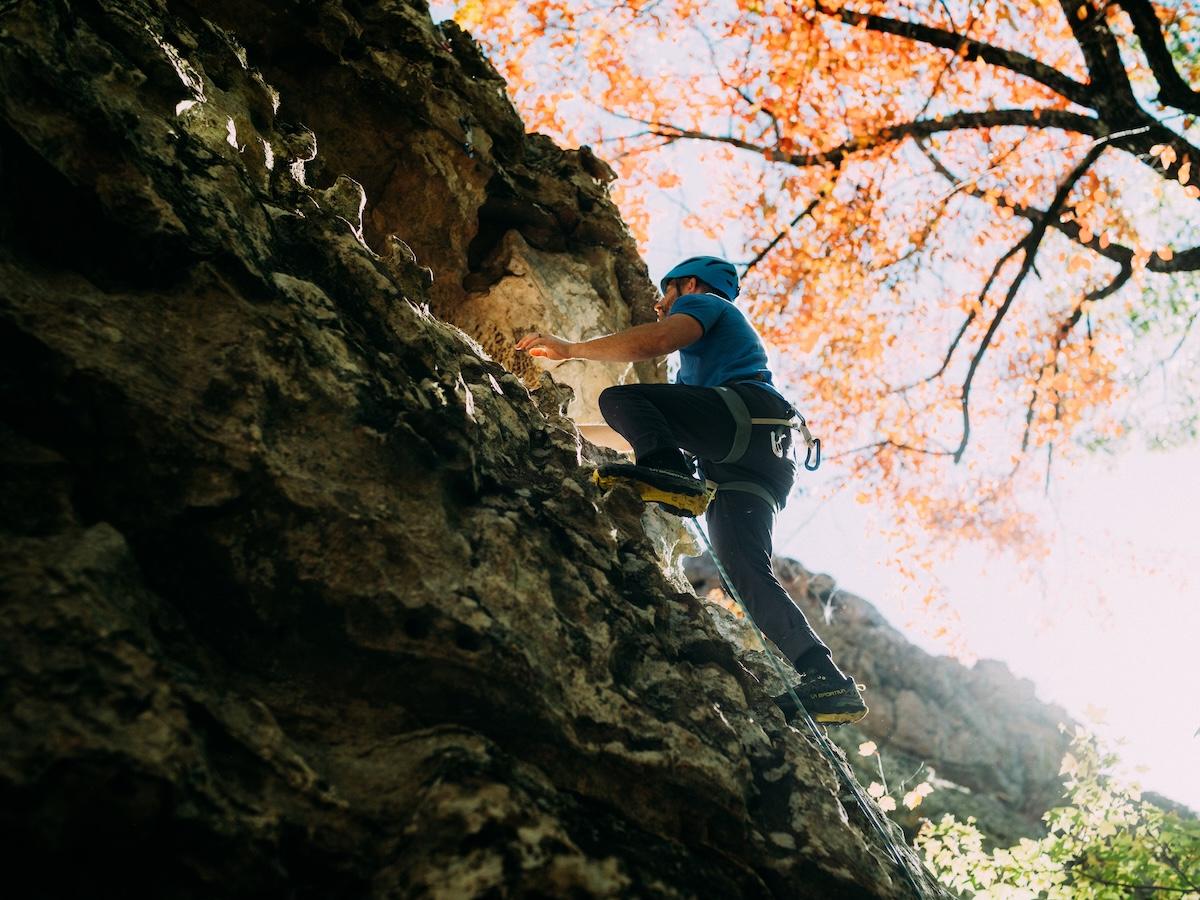
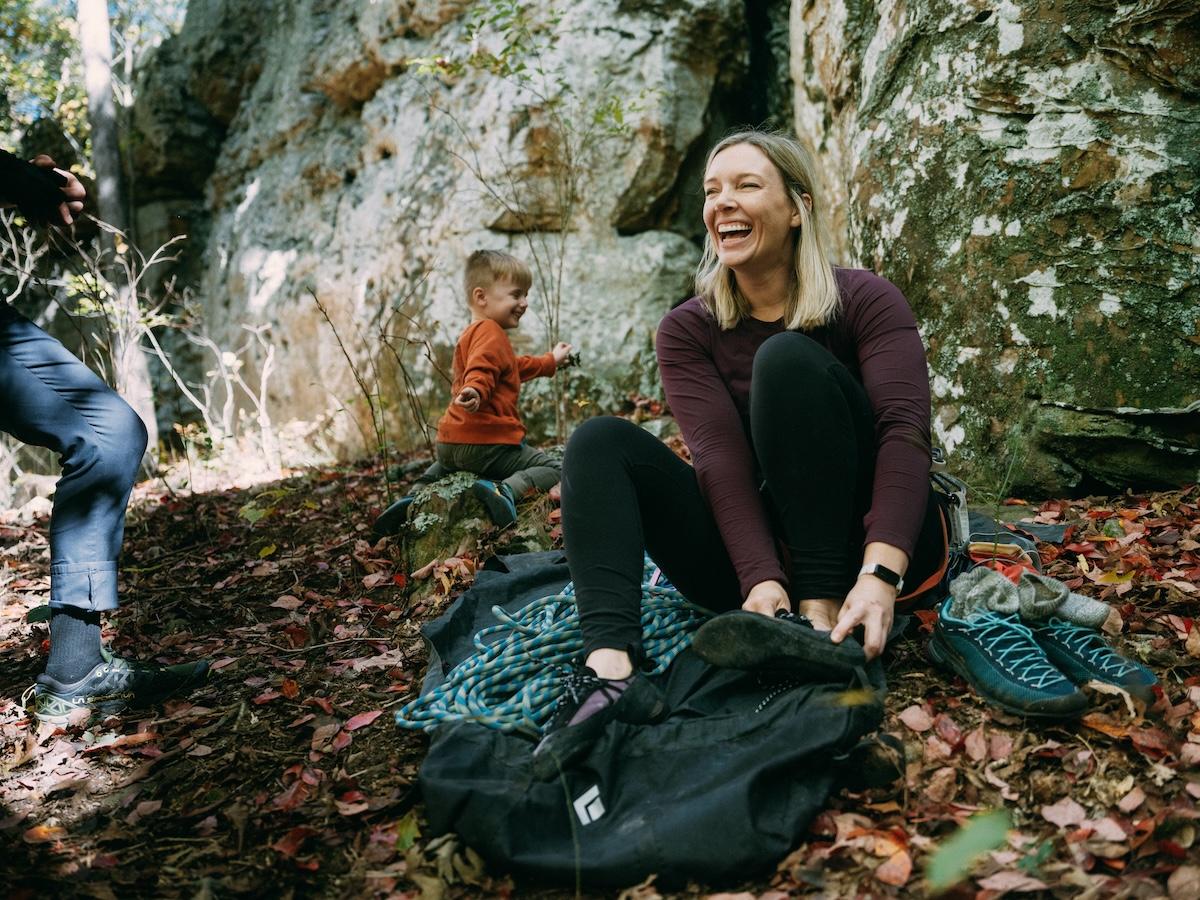
Arkansas Parks and Recreation Foundation contracted with Andrew Bland with CragWorks for both the rock-climbing assessment and the implementation of sport climbs in Seven Hollows. The Access Fund and Arkansas Climbers Coalition worked on developing protocols for rock climbing development and maintenance for Petit Jean and other state parks that may have rock climbing in the future. The Arkansas Archaeological Survey assessed the areas to make sure cultural sites were not impacted. Allen said climbing has been developed in two areas and will range from beginner to advanced. Information about them will be included in a guidebook so that users can easily find and climb routes and boulder problems. For park visitors without climbing experience or equipment, there will be a guide service initially operating out of Mather Lodge at the park to offer guided rock climbing and bouldering for families and visitors, both novice and expert alike.
The climbing area includes around 35 to 40 roped rock climbs with most of them bolted and some that are traditionally protected and over 150 bouldering problems. There will also be a process for climbers to add new routes and boulder problems through an approval process that includes input from park staff, archeologists and climbers.
The project has the potential to bring awareness to the sport in general. ”It’s a big step forward for rock climbing and for the relationship between Arkansas State Parks, rock climbers and outdoor recreation in general,” said Cole Fennel of Natural State Publishing, who is working with Arkansas State Parks to produce a guidebook for the climbing area.
Fennel mentioned that climbing is becoming more available with climbing gyms and areas like this can help people have a safe place to transition to outdoor climbing.
“Like most rock climbing around the world, every area is unique based on the geology, natural ecology and cultural history,” said Allen. “The geology is unique for the state, and the prominent bluffs of Hartshorne Sandstone contain Liesegang banding which produce interesting color variation and blocky iron ridges referred to as carpet rocks. These features make for fun and engaging rock climbing. The setting of the rock climbing within the narrow hollows feels very intimate and unlike other rock-climbing areas in the state.”
The state park has abundant cultural and natural significance. “Petit Jean State Park has a rich cultural history dating back to pre-historical times,” said Joe Larson, Park Interpreter at Petit Jean State Park. “Some of the first clear signs of human interactions with the mountain come in the pictographs that were left on shelter walls by American Indians 500 to 1500 years ago. Petit Jean also has very diverse natural resources. The Seven Hollows Area represents one of the most extensive sandstone glade networks in the Arkansas River Valley and is home to many interesting western species not commonly found elsewhere in Arkansas, like western diamondback rattlesnakes and collared lizards.”
The new climbing area and routes will not impact archeological sites at the park, highlighting a balance of conservation and recreation. “Any time that we humans interact with a landscape there is a potential for us to have impacts but there is also a potential to build a lasting connection with the landscape,” said Larson. “The key is to balance conservation and recreation and educate the public on the importance of protecting our natural areas. At Petit Jean State Park, we have worked closely with the Arkansas Archeological Survey to define climbing areas that will not impact any of the known American Indian rock art sites in the park.”
Larson mentioned that climbers are inherently appreciative of the natural world. “We climb on these rocks, and we become kind of intimately familiar with these areas,” he said. “We really value both our natural and cultural resources and the last thing we want to do is to be the ones that are damaging those sites.”
Larson said the new climbing area is a step forward for central Arkansas rock climbers, providing solid rock-climbing options near one of our state’s biggest metro areas.
“Petit Jean State Park is a part of what's called a syncline,” Larson said. “When it was deep underground before it was uplifted a lot of minerals were higher accumulated in the rock here at Petit Jean specifically. And so, it has these amazing swirls and bands and bubbles and crazy pockets and features of this iron oxide. It's called Liesegang banding. There are other places in the state where you can find iron banding like that, but Petit Jean is unique, even compared to other Hartshorne in how much iron banding there is.”
Larson said this stands out, even compared to other Hartshorne Sandstone climbing areas for climbers, because the iron oxide itself is even harder than the surrounding sandstone so when it erodes, it ends up sticking out of the wall, almost like holds at a climbing gym. “It's really unique to have these holds that kind of protrude from the wall,” he said. “It makes nice, interesting holds for climbers and aside from that it's just beautiful to look at.”